Friday, 15 April 2011

A form of translation


I want to explore their connection between changes within interior styles and changes in society. What fuels my body of work is elements of this interior history.
 I would like to borrow and take forward the clear division in the interior style with a distinctive feminine taste and a stereotyped feminine style of decoration with expressive lighter colours, less robust shapes and a fussiness of ornamentation and exaggerated ornate forms
There was an air of heaviness in decoration and layering of materials. However there is little visual evidence of interiors at that time so literature is very important to me in the form of letters exchanged between middleclass ladies and art history books where opinions can be limited but descriptions are in detail.
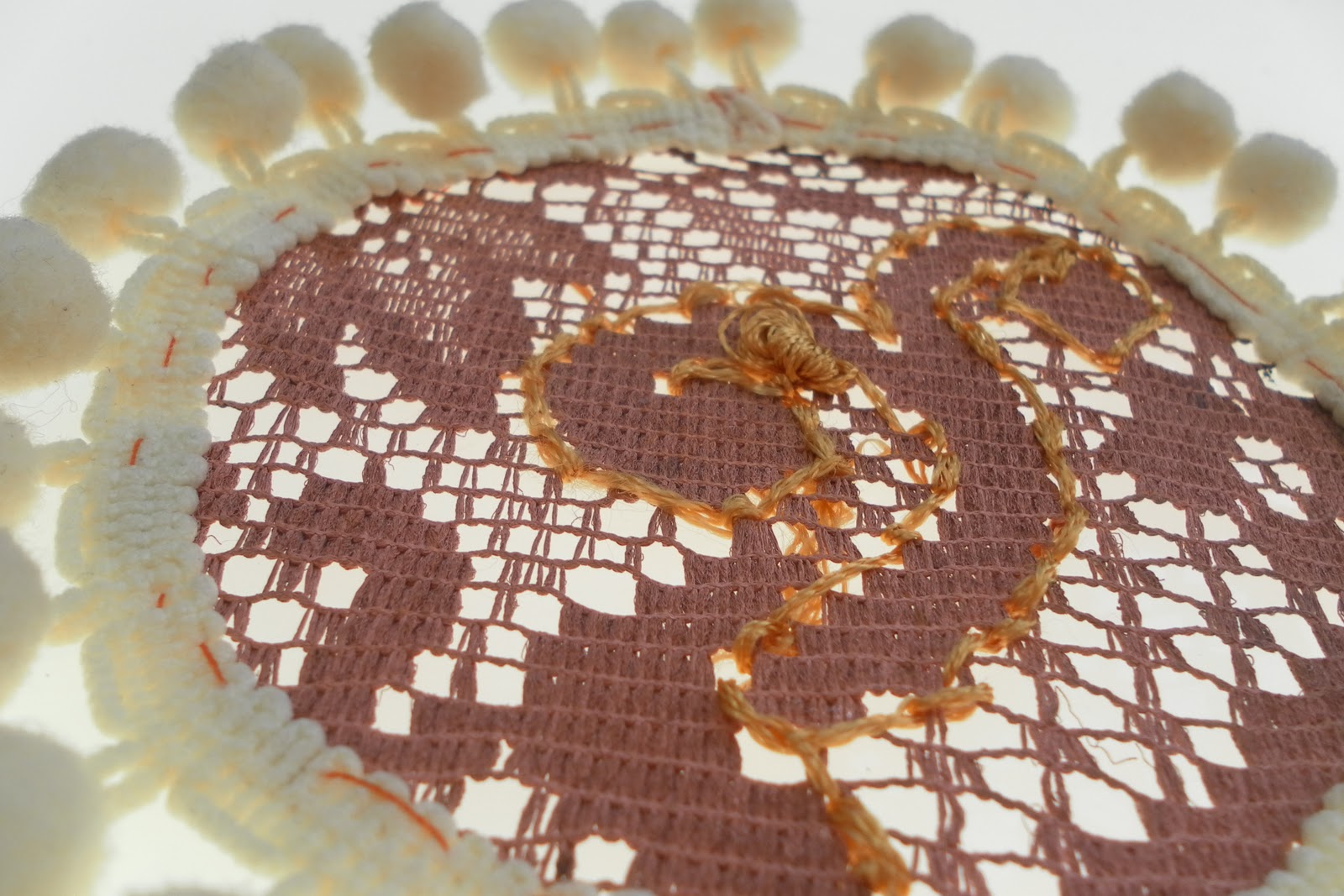
Initially preoccupied with technical matters, unfamiliar colours, the texture of the material, the properties of the different threads and the complexity of the weave, as the work develops, the new medium of needle and thread will begin to contribute to the ideologies of what I want to achieve within a contemporary art form, evolving naturally from its historical and representative past.


I want to experiment with this lost world and address themes of translation and transformation with the work posing visual and tactile questions concerning the translation of the meaning.
I am researching and exploring specific textile stitches loyal to the Eighteenth century such as French Knots and couching stitches, retaining both the sheer delicacy and the representative historical narrative.
Some of the technologies I have stumbled across and best suited so far with the textile elements include electroforming, which brings out the textures within the 2D and 3D embroidery work; this is achieved through the use of different threads and subtleties of the stitch including the well chosen canvas initiating the work
Which I have found to be an alternative canvas of manmade netted curtains which demonstrate this the best. The electroforming exaggerates the heaviness in ornamentation and weighs down the feminine threads marrying the two genders.
The intricacy and fussiness of the ‘alternative canvas’ projects the interiors of the time with the layering and heavy gold appearance.
Photographic and image processes are something that I feel could help narrate the body of my work with stills of interiors, designs and portraiture of the 18th century brought to new and up to date forms of illustration and narrative. Layered and combined with the textile elements fuelling my work this could precede an effective composition. I need to discover how far I can push my work to discover these possibilities.
I want to take the specific characteristics of the interiors and explore through relevant literature and available prints what they represent as I believe they are all narrative to the changes at the time such as the layout, preferred colour schemes, functions and orientation of their views. I would like to follow this skeleton to consider, develop and proceed with structuring the collection expressing the transformation and diversity within this period.


Although I feel my work still holds that sense of assemblage rediscovered through material experimentation 18th century interiors set standards in taste for the future and used as models of excellancy, having that heir of antiquity about them further reference the past. While the work may have that element of ornateness to it I want to achieve a deeper level of meaning embedded in the pieces which requires a closer look. Although at the moment I feel I am only touching the iceberg of what I want to achieve this is a step in the right direction for me.
I would like to see the body of work narrate within a wearable form revealing the relationship between changes in history and the interior domain. It is important for the work to be wearable as interiors became a personal aspect of life in the past, remembering the fact that they were designed both to accommodate and entertain guests as a status symbol or to hide away in, the sheer multitude of rooms in 18th century middle class houses could accommodate for both moods. They reflected personalities and attitudes to what was going on in the world. To be able to wear that piece of jewellery and carry it around on a lapel is a projection of someone’s most intimate place. I would like my jewellery to bring these discussed images and ideas into the present and address its influence. 

Needlework of the 18th century


During the 18th century needlework reached an excellence never surpassed in terms of variety by any other period in history. It is a captivating time to look back on as it was a professional occupation, dominated by men. It served as employment and a leisure activity for women when it was the main source of decoration for clothes and interiors. Machines had not been invented so the craft was truly hands on requiring expertise and patience.
I believe these original and stereotypical past times with the medium of thread are able to represent how polite accomplishments ruled the distinction of the genders in 18th century interiors, evoking a representation of the development and its culture within society.
The interiors were outrageous in their ornamentation and style and enormous sums of money were spent on decoration. I am fascinated with the romantic interiors and fussiness of this bygone era of grandeur as well as the social and economic issues surrounding it. This is where my historical research is based. Interiors of that time could be considered an instrument of repression within domesticity but also could be regarded as an emerging expression within the form of socialism at that time. Later Eighteenth century London was faced with a variety of innovations; industrialisation, integration of immigrant cultures and systems of mass manufacture. This created a division of home and workplace, with women losing their form of education from home based businesses, being forced to the confines of the household they started to develop and articulate a more forceful and privileged ability to comment on the nature of fashion arrangements of interiors.
Women started to make significant choices in the form of visual sensibility, acquiring a voice with special interest in the organisation of domestic space, this generated an energetic and independent confidence with an acute awareness of surroundings. In turn this gave assertion to females maintaining and developing an independent sphere of influence.


This gave rise to the ‘Bluestocking’ professionals, which were a group of middleclass, educated Women who were involved in exacting changes in the face of traditional society. This was at a time in history when women were becoming more present and powerful. Many turned to a career in writing as part of the publication process to get their message across, occasioning the male and public sphere with their opinions and ideas.
The ‘Bluestocking’s’ professional activity, its range, ambition and diversity is little known today and that is why I want to develop these ideas into a series, almost narrative to the development of the interiors and its culture of the Eighteenth century, its interiors becoming a natural expression of personality as I believe they had a large impact on British society influencing environments and their relationship with interior styles of that time.


Since finding this new working practice and recapturing the essence lost of the ‘rough’ textile aesthetic, the notion of needlework and embroidery have fascinated me. This fuelled my ongoing discoveries. I feel it is an art form with a complex and well documented past, enabling me to reconsider it as an illuminating and revelatory format in which to express the ideals of the project. The hand woven setting proves itself to be an alternative soft canvas; warm, tactile and able to represent ideas and images on a variety of scale in terms of imagination when mixed with contemporary forms of technologies.
The concept I developed through this exploration has reigned my interests in and brought me to where I am at in my development currently, working in a more considered and structured practice naturally loyal to my concept which aids me with decision making and editing my work, marrying sketching and prototypes together.

Working practice


Once starting the MA I felt I could really explore my passion. The craft based work manifested itself as a chaotic, low tech, ‘rough’ aesthetic which generated a charming potential in the form of ‘objects’.  This was developed through intuitive material exploration and quirky composition using my wide, varied interests and enthusiasm. My expansive curiosity within the world around me works in my favour most of the time, but concerning my design development I feel it hinders me.
This shows in the technical exploration I carried out within past projects which included castings and enamellings through to wood and resin work, not to mention the rest.
I started to use these forms as vehicles to represent what I wanted to achieve in the process to reproduce elements of them and forms to take forward.
My work had been about seeking out what is at hand; a natural and intuitive process of hunting, gathering and bringing together a ‘collection’ of found objects and resources which which intrigue me.
These objects were of low value and importance to some but to me they were an exciting myriad of items, which all had a previous purpose to them which I deconstructed and reconstructed. The objects started to inform me of how to progress to further exploration; this process was lead by experimentation and discovery in a resourceful way.


Using bri-colage and assemblage the items were selectively brought together by cold connections such as quirky hinges made out of paint brushes and straws, this is where my particular attention and interest was drawn addressing the relationship between function and decoration taking materials used for another function and reusing them to devise interesting objects of curiosity.
Even at this stage my work employed a wide range of materials and resources from ‘everyday’ living’ making the normal and abnormal more interesting.
The range consisted of low technical skill as a means of communicating my ideas and concept at this stage into reality fast and economically.
What I gained out of working in this curious way developed my working practice into its own with which I became familiar and felt it the best suited method for me: dissassembling, reasembling, interpreting and reproducing 

My Work & My Development


I am relatively new to the jewellery market as I completed my BSc degree in Design & Technology at Bangor University.
I completed a year in industry working with urban sculpture & design companies where CAD was in abundance.
Even designing and manufacturing my first range of jewellery was majorly driven by the commercialised integration of CAD. Something was absent from my career path and I soon realised it was the passion to pursue a more hands on craft based skill I had missed so much. I felt I needed to compensate for what had been absent in my work so far, therefore I feel this is a reasoning behind my initial approach.

Thursday, 24 March 2011